solar panel system
A solar panel system uses photovoltaic (PV) modules to capture sunlight and convert it into clean, usable electricity for your home or business. It is one of the most effective ways to lower your electricity bills, secure backup power, and reduce your carbon footprint.
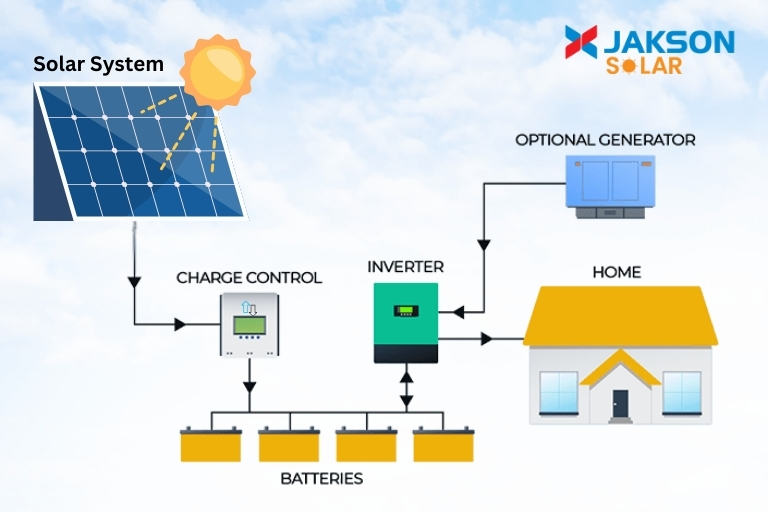
Core Components of a Solar System
A fully functional solar installation relies on a combination of critical hardware components working together:
• Solar PV Modules (Panels): Installed on the roof to absorb sunlight and generate Direct Current (DC) electricity. Advanced options include high-efficiency N-Type TOPCon and Bifacial (dual-glass) panels that capture sunlight from both sides.
• Solar Inverter: The "brain" of the system that converts the raw DC electricity generated by the panels into Alternating Current (AC) power, which runs your household appliances.
• Solar Batteries: Optional storage blocks used to stash excess electricity generated during the day so you can power your home during the night or during grid outages.
• Mounting Structure & Balance of System (BoS): High-strength racking systems that secure the panels to your roof, alongside universal solar connectors, AC/DC distribution boxes, and safety circuit breakers.
⚡ Types of Solar Panel Systems
Depending on your energy goals and local grid infrastructure, you can choose from three main system architectures:
System Type Grid Connection Battery Storage Best For Key Advantage
On-Grid (Grid-Tied) Yes No Urban & suburban homes with reliable power grid access. Lowest upfront cost; supports net metering to sell excess power back to the grid.
Off-Grid No Yes Remote locations, rural areas, or cabins without utility grid access. Complete energy independence; relies entirely on local solar generation and battery banks.
Hybrid Yes Yes Areas with frequent power cuts that still want utility grid benefits. Provides seamless battery backup during blackouts while retaining net metering perks.
📋 Key Factors to Consider Before Installing
• Rooftop Space & Orientation: A standard 1 kW solar system generally requires around 80 to 100 square feet of clear, shadow-free rooftop space. The roof must receive 4–6 hours of direct sunlight daily.
• Energy Consumption Assessment: Reviewing your past 12 months of utility bills helps installers determine the perfect system capacity (e.g., 3 kW, 5 kW, or 10 kW) to match your household load.
• Financial Incentives & Subsidies: Many regions offer lucrative government subsidies and tax credits for residential rooftop solar installations, significantly accelerating your return on investment.
• Warranty Support: Top-tier manufacturers—such as Waaree Energies, Adani Solar, UTL Solar, and Microtek—typically provide a 10 to 12-year product warranty coupled with a 25 to 35-year linear performance warranty.
To give you a precise breakdown, could you tell me:
1. What is your average monthly electricity bill or monthly power consumption in units (kWh)?
2. Do you experience frequent power outages in your area?
3. What country or state are you located in? (This helps me verify current government solar subsidies and net metering rules).
Get a Quote