Building Management System
A Building Management System (BMS), also known as a building automation system (BAS), is a computer-based control system installed in buildings to centralise, monitor, and manage mechanical, electrical, and electromechanical services. Acting like the "nervous system" of a modern facility, it connects various hardware components into a single interface to reduce energy consumption, lower operational costs, and keep occupants comfortable.
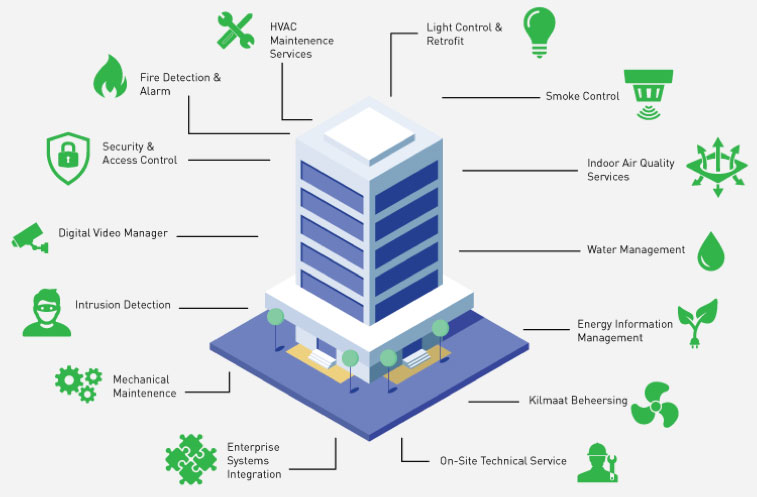
Core Systems Managed by a BMS
A comprehensive BMS integrates several critical utilities to ensure they work in harmony:
• HVAC Systems: Controls heating, ventilation, air conditioning, and room temperatures based on ambient conditions or schedules.
• Lighting & Shading: Automatically manages lights and window blinds based on room occupancy and daylight availability.
• Power & Energy: Tracks energy usage across multiple sources like electricity, gas, and solar panels to optimize utility consumption.
• Security & Access Control: Manages surveillance cameras, alarms, and digital door access across the premises.
• Safety Systems: Monitors life-safety operations, such as smoke detection, fire alarms, and elevator overrides during emergencies.
How a BMS Works: The 3-Level Architecture
A building management system functions through a continuous "sense-process-act" loop divided into three primary structural layers:
1. The Field Level (Hardware): This layer consists of the physical devices placed throughout the building. Sensors collect real-time ambient data (like temperature, motion, or air quality) and pass it up, while actuators receive instructions to perform physical actions (like opening a ventilation damper or turning a valve).
2. The Automation Level (Controllers): The brain of the system, centered around Direct Digital Controllers (DDCs) or Programmable Logic Controllers (PLCs). These controllers process incoming data against predefined rules and thresholds, sending automatic operational instructions back down to the field devices.
3. The Management Level (Software): The human-machine interface (HMI) or dashboard where building operators monitor real-time data visualisations, adjust target baselines, track energy analytics, and receive immediate maintenance alerts or equipment failure alarms.
Primary Benefits
• Energy Savings: Automatically adjusting environmental settings based on occupancy can slash building energy costs by 15% to 40%.
• Reduced Operational Costs: Real-time data logging and diagnostic alerts allow teams to handle issues before they cause costly hardware failures.
• Occupant Comfort: Maintains precise control over indoor air quality and climate, enhancing productivity and safety.
To understand how these components interact in a real-world setting, watch this animated breakdown of a Building Management System's architecture:
Get a Quote